A Visit to the BOS Library
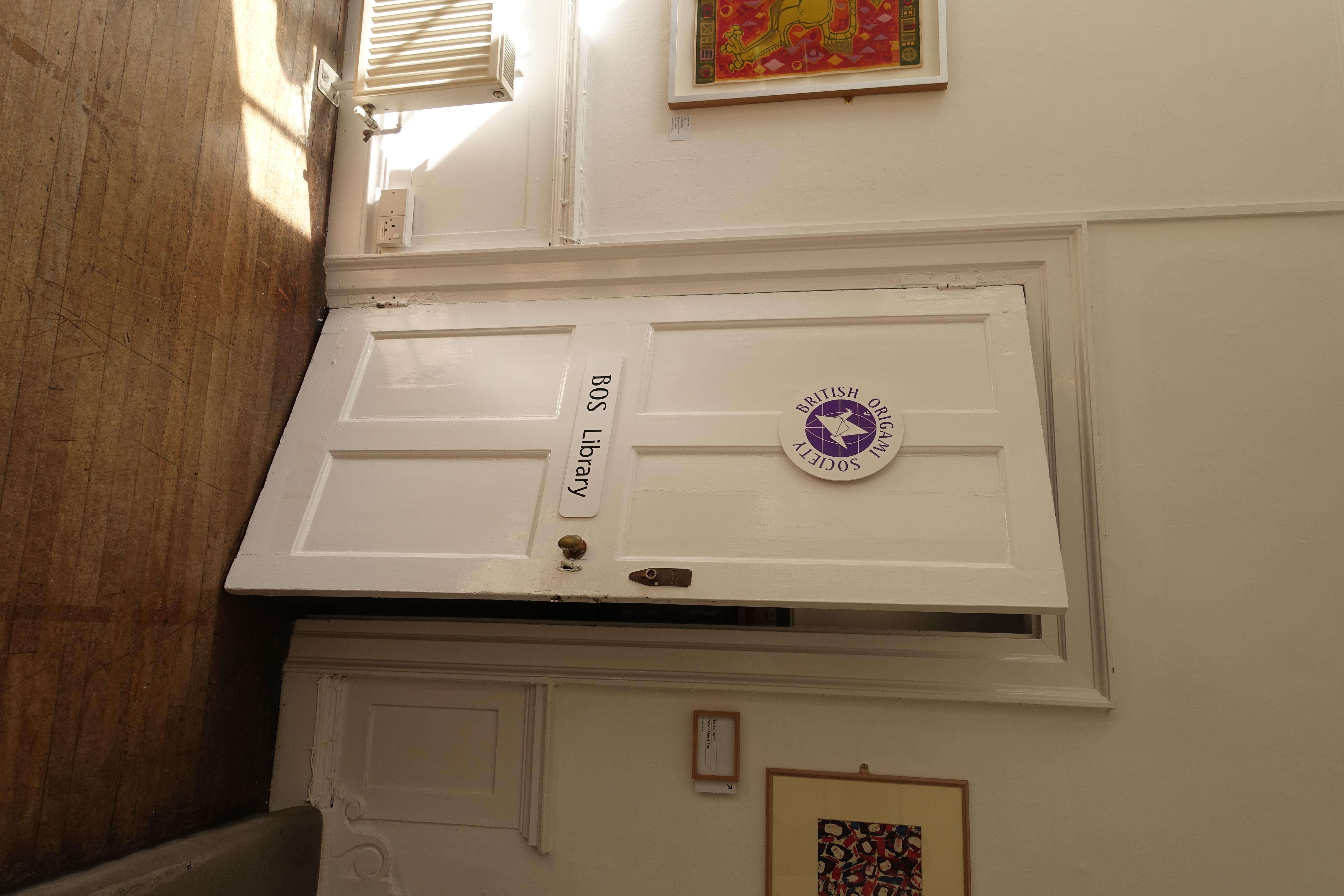
My visit to the BOS convention in Nottingham reminded me of the convention in Colchester in 2024, during which I had the opportunity to visit the society’s library. With the permission of Adam Woodhouse, who was my guide in the library at the time, I’m presenting a summary of the visit to this treasure trove.
Located behind an unimposing door in The Minories, a historical building in Colchester, UK, the library consists of a single large room split into smaller compartments by bookshelves. Unsurprisingly, it hosts many books and magazines. However, it also acts as a general archive of the society and preserves lots of other artifacts, some connected to famous origami personalities.
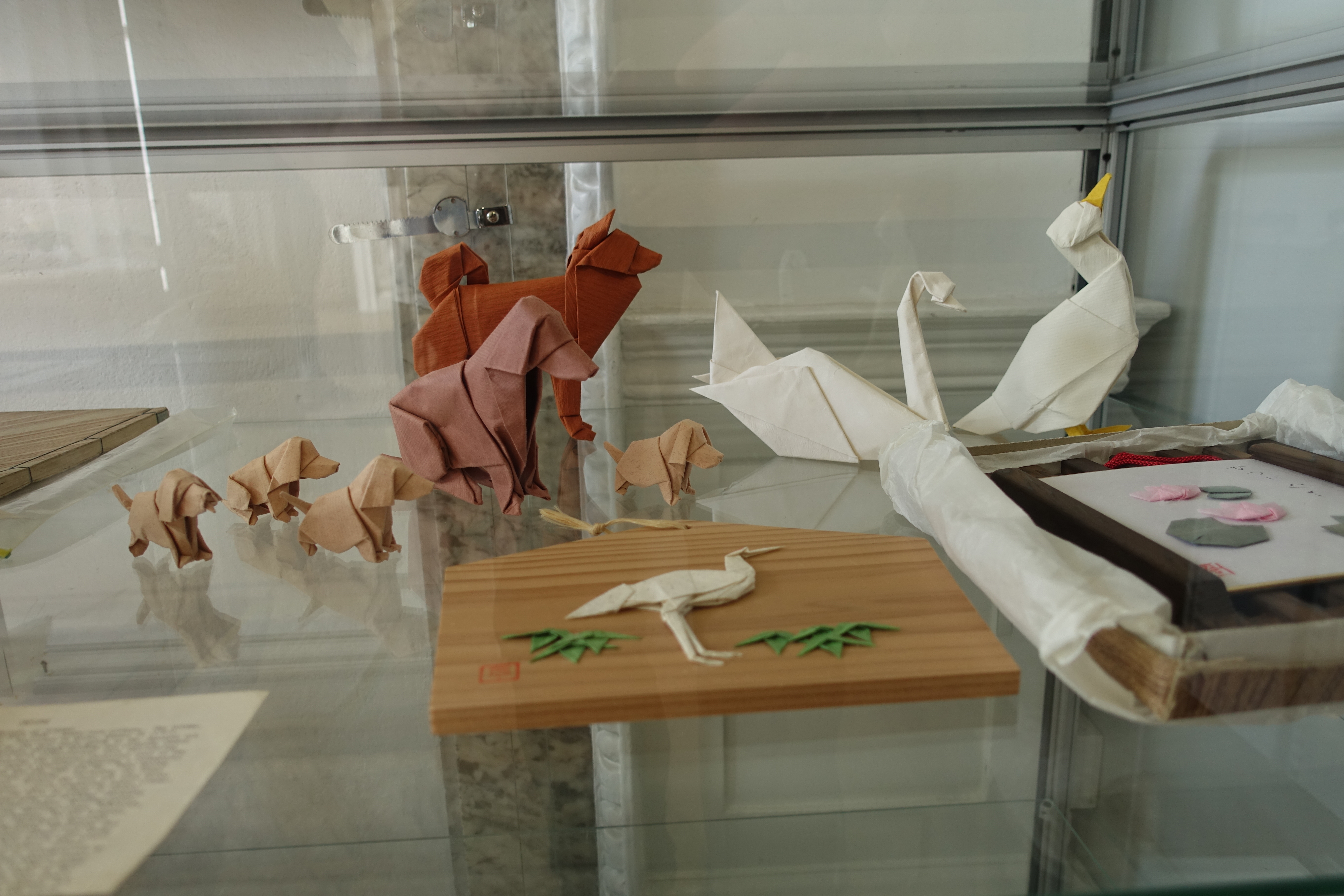
In the following picture, you can see models folded by Akira Yoshizawa himself. There are also models folded by other famous designers on display, and probably many more in storage. The collection includes unsorted yet boxes of things left over by BOS members who passed away. Folded models, diagrams, personal notes, and other items can all be of great interest to the history of origami if there are enough hands sort and document them. The BOS is lucky enough to be able to afford an archive like this, but not all societies have storage to keep their legacies. Even if the artifacts themselves are preserved, the lack of manpower can lead to them not becoming widely known and knowledge getting lost. The topic of preserving and documenting the work of origamists who pass away is - in my opinion - an important one. I wrote about it for The Paper in my Preserving your Origami Legacy article.
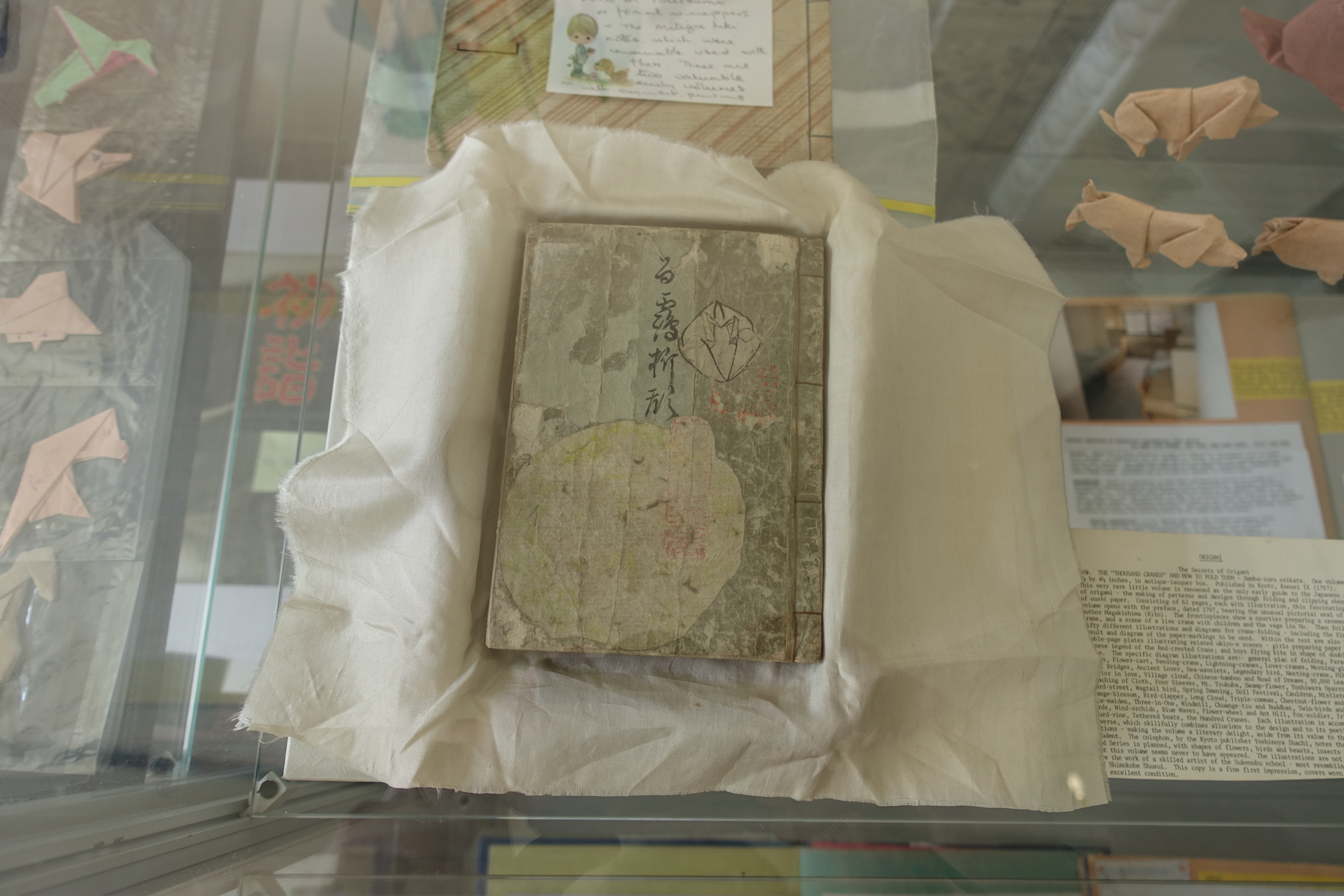
One of the most recently acquired items in the library was a copy of Hiden Senbazuru Orikata (秘伝千羽鶴折形), usually translated as “The Secret of Folding One Thousand Cranes”. This famous book, published in Kyoto, Japan, in 1797, is considered the earliest book dedicated completely to origami, and copies are very rare. It presents a number of variants made by what we would today call kirgami, as it involves cutting the paper to create compositions of multiple connected cranes. This of course indicates that a single crane was already considered a well-known model at the time.
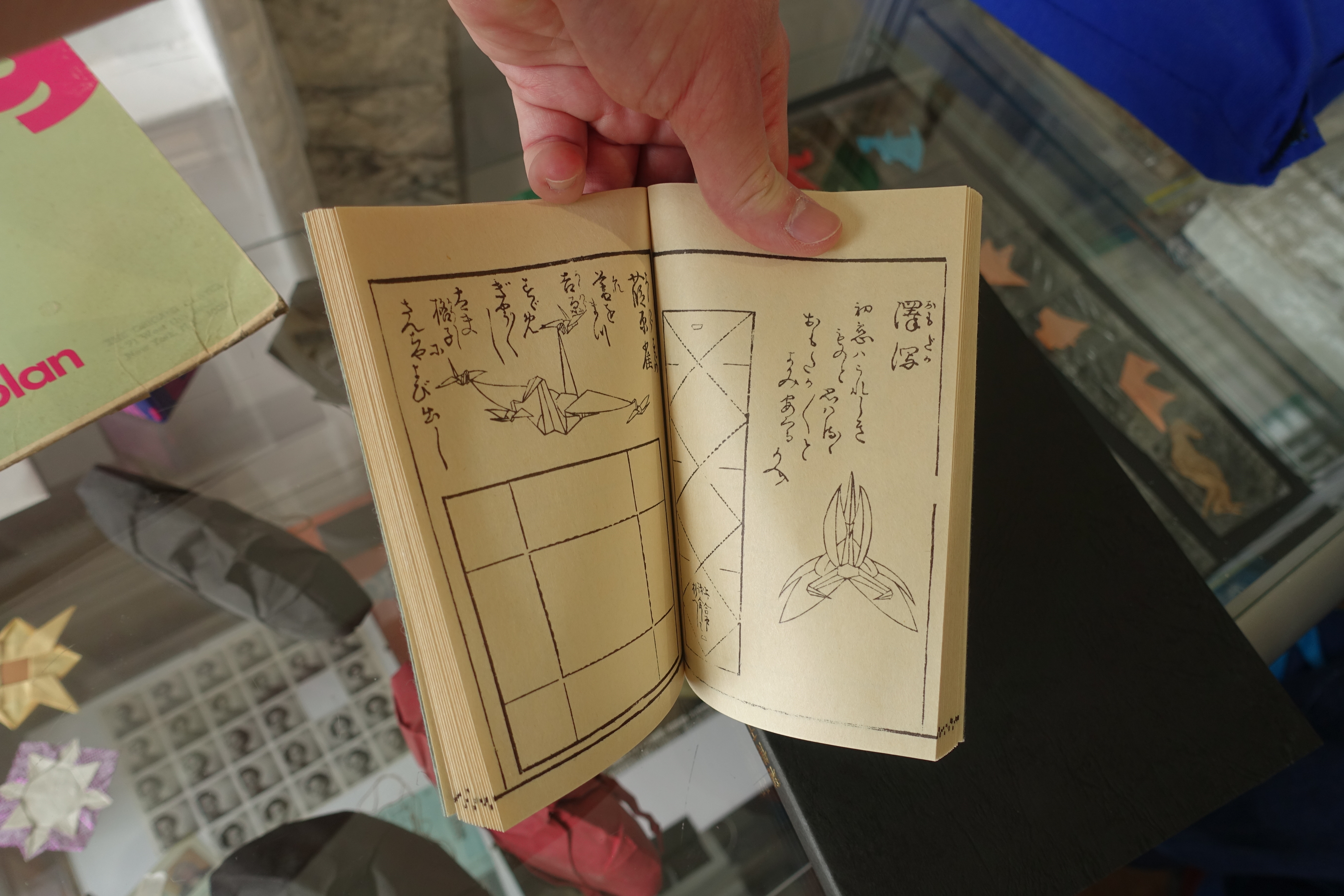
Due to the book’s rarity, I was not allowed to take the original from its case, but a facsimile was available for paging through (shown in the next image). Note that the instructions are very different from the style we use today, with basically just the cut lines shown. The modern Yoshizawa-Randlett diagramming system we take for granted, is a post-World War II invention.
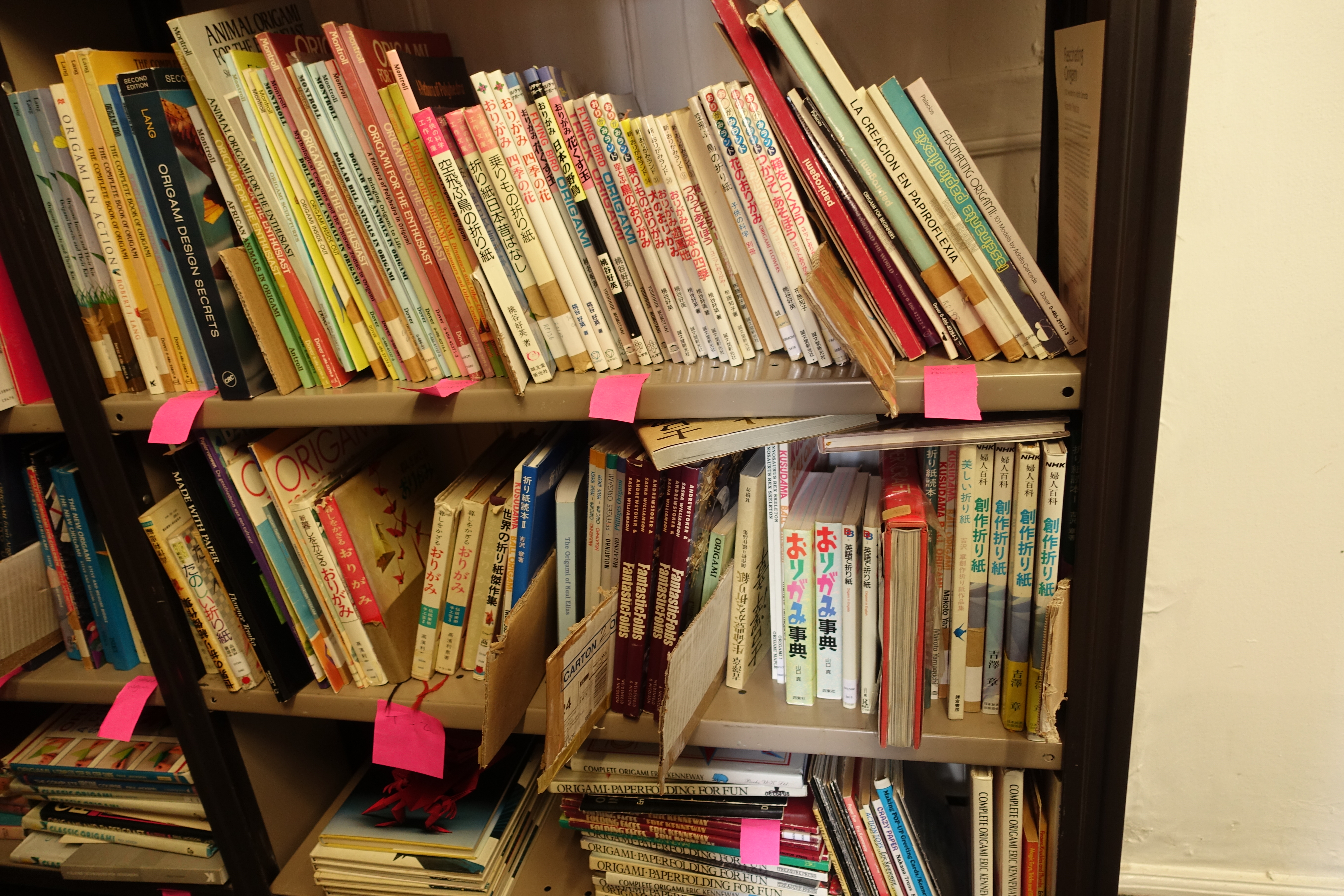
Besides the highlights mentioned above, the library is of course a vast collection of books and periodicals. I could spot rows with dozens of issues of origami magazines from all over the world, some going back to the early years when origami societies were just starting to publish them. I noticed a number of popular books, some of which I also own, and of course many I had never even heard of. I regret that I had very little time for browsing since I’m sure I would be able to find very interesting stuff there. In particular, among the Japanese origami magazines are bound to be some containing diagrams of Shuzo Fujimoto’s models, some probably unknown to me. If you have access to the BOS library or another similar archive, I encourage you to spend some time browsing and checking what you can find. Much of what origamists create is not documented at all, gets lost over time, and then sometimes reinvented independently. Libraries and archives allow us to preserve at least some of those ideas, but only if someone comes along and actually reads what they store. Looking into the minds of creators of yore is fascinating and inspiring. It may be a big word, but I think there is such a thing as “origami culture”. Like any other culture, it has a living component which is its present, developments which shape its future, but also a history which is worth looking into.
Comments